Traveling is one of life’s greatest pleasures, but for millions of adults, navigating airports, language barriers, and unfamiliar environments with hearing loss can introduce an extra layer of anxiety. Fortunately, wearing hearing aids shouldn’t hold you back from exploring the world.
With a little preparation, you can seamlessly navigate TSA security checkpoints, manage international power differences, and protect your hearing devices in any climate. This comprehensive travel checklist for hearing aid users ensures your devices perform perfectly, letting you focus entirely on enjoying the sights and making memories.
Traveling with Hearing Aids? Follow These Simple Tips to Travel with Confidence
1. Navigating Airport Security and TSA Screening Like a Pro
One of the most frequent questions travelers ask is: Do I have to remove my hearing aids at airport security? The short answer is no.
The Transportation Security Administration (TSA) explicitly states that travelers are not required to remove hearing aids or cochlear implants at security checkpoints. In fact, audiologists recommend keeping them in so you can clearly hear instructions from airport personnel.
Tips for a Smooth TSA Experience:
- Notify the Officer: Before screening begins, inform the TSA officer that you are wearing hearing aids.
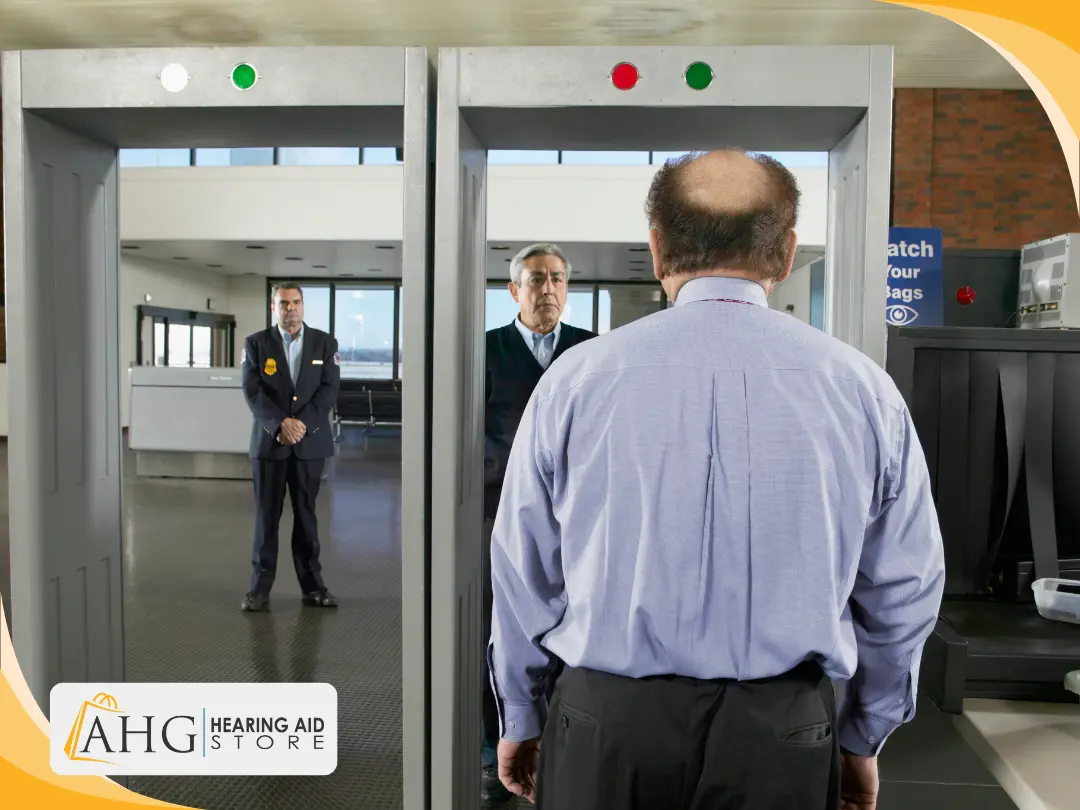
- Walk Through Safely: You can safely wear your hearing aids through advanced imaging technology (body scanners) and walk-through metal detectors. These machines will not damage your digital hearing aids or alter their programming.
- Prepare for X-Rays: Never place your hearing aids, charging cases, or wireless streaming accessories directly onto the X-ray conveyor belt, as the intense radiation could potentially disrupt sensitive digital components. Keep your devices in or on your ears, and store backup accessories safely inside your carry-on bag.
- Use a TSA Notification Card: If you feel anxious or have severe hearing loss, download a printable TSA Notification Card online. This allows you to discreetly inform agents of your condition without drawing unwanted attention.
Pro Tip for In-Flight Safety: During the flight, you do not need to turn off your hearing aids. While cellular devices must be put on “Airplane Mode,” the Federal Communications Commission (FCC) exempts assistive listening devices because their short-range Bluetooth signals do not interfere with aircraft navigation systems.
2. The Essential Travel Packing Checklist: Spare Hearing Aid Parts and Backups
When you are far from home, finding a specific replacement part for your exact hearing aid model can be challenging. To prevent minor equipment issues from ruining your vacation, always pack a dedicated hearing aid care kit in your carry-on luggage rather than checked bags.
Hearing Aid Travel Kit Essentials:
- Batteries or Charging Docks: If you use disposable batteries, pack enough to last your entire trip plus a one-week buffer. For rechargeable hearing aids, bring the charging dock and a portable power bank in case you encounter long layovers without outlets.
- International Voltage Adapters: Different countries use different voltages (e.g., 110V in the US vs. 220V in Europe) and plug configurations. Ensure your charging base is dual-voltage, and pack a certified travel adapter plug.
- Wax Guards and Domes: Changes in altitude, humidity, and exercise while traveling can cause increased earwax production. Bring plenty of extra wax filters, tips, and domes to keep your sound paths clear.
(Pro tip: Schedule an earwax removal appointment with our audiologists in Mesa or Scottsdale before your trip. That way, you’re starting out with clean ears!)
- Cleaning Tools: Pack your multi-tool brush, wax loop, and microfiber cloth to perform daily hearing aid maintenance at night in your hotel room.
- Hearing Aid Dehumidifier: If you are traveling to a humid, tropical destination or planning outdoor excursions, sweat and moisture can cause internal circuitry to short-circuit. A hearing aid dehumidifier can remove moisture overnight.
Learn more: Beating the Arizona Heat: Protecting Your Hearing Aids From Sweat and Moisture
3. Maximizing Your Hearing Aid Technology While Traveling
Modern smart hearing aids are equipped with features designed to improve your lifestyle, particularly when traveling:
- Utilize Companion Apps: Download your device’s smartphone application before leaving. You can use it to adjust background noise suppression in crowded train stations or bustling European plazas, for example.
- Geotagging for Lost Devices: Many premium brands offer a “Find My Hearing Aid” feature via GPS. If a hearing aid drops out while you’re sightseeing, your smartphone can pinpoint its exact location.
- Bluetooth Streaming: Stream navigation prompts from Google Maps, flight delay announcements, or museum audio guides directly into your ears for pristine audio clarity.

The Most Important Step: Visit Your Audiologist for a Hearing Aid Checkup Before You Travel
The single best way to ensure a worry-free vacation is to schedule a preventative appointment with your audiologist at Advanced Hearing Group in Mesa or Scottsdale before your departure date.
Just like getting a multi-point inspection on your car before a long road trip, your hearing aids deserve professional attention. Our expert team can check your hearing aids for debris and clean them accordingly, ensure your devices’ firmware is fully updated, and adjust your hearing aid settings for optimal performance in active travel environments.
Give yourself the gift of clarity and absolute peace of mind—contact us today to book your pre-travel hearing aid checkup!