
If you’re researching hearing aid options, one of the biggest decisions you’ll face is whether to choose rechargeable hearing aids or traditional hearing aid models with disposable batteries. Both options can deliver excellent sound quality and advanced features. However, the right choice for YOU depends on your lifestyle, dexterity, budget, and daily routine.
In this guide, we’ll break down the pros and cons of each option and explain who benefits most from each type of hearing aid. Then, we’ll show you why working with a hearing expert—like the audiologists at Advanced Hearing Group in Mesa and Scottsdale, AZ—can make all the difference.
What Are Rechargeable Hearing Aids?
Rechargeable hearing aids use built-in lithium-ion batteries that are charged overnight using a docking station. Instead of replacing small batteries every few days, you simply place your hearing aids in the charger—similar to charging a smartphone.
Most modern rechargeable devices provide a full day of use (16–30 hours) on a single charge, even with streaming features like Bluetooth.
5 Key Benefits of Rechargeable Hearing Aids
1. Convenience and Simplicity
With rechargeable hearing aids, you don’t have to worry about handling tiny batteries. Just place your hearing aids in the charger at night, and they’re ready to go in the morning.
2. Easier for People with Limited Dexterity
Rechargeable hearing aids are ideal for individuals with arthritis, vision challenges, or difficulty handling small objects.
3. Eco-Friendly
Rechargeable hearing aids reduce waste from disposable batteries, making them a more environmentally friendly choice.
4. Long-Term Cost Savings
While the upfront cost may be slightly higher, you won’t need to purchase batteries regularly, helping you save money over time.
5. Reliable Performance
Modern lithium-ion batteries provide consistent power throughout the day, reducing performance fluctuations.
Drawbacks of Rechargeable Hearing Aids
1. Daily Charging Required
If you forget to charge your hearing aids overnight, you may be without them the next day.
2. Limited Backup Options
Unlike disposable batteries, you can’t quickly swap in a fresh battery if power runs out.
3. Battery Replacement Over Time
Rechargeable batteries typically last several years but may eventually require replacement by a professional.
What Are Hearing Aids with Replaceable Batteries?
Traditional hearing aids use disposable batteries, which must be replaced every 3–10 days, depending on usage and device size.
These batteries are widely available and easy to carry as backups.
4 Key Benefits of Replaceable Battery Hearing Aids
1. Instant Power Replacement
If your battery dies, you can simply replace it and continue using your hearing aids right away.
2. No Charging Required
This is great for individuals who prefer not to worry about charging devices every night.
3. Ideal for Travel
Replaceable batteries are especially convenient for extended trips where access to power may be limited.
Related article: Traveling with Hearing Aids: Important Tips and Considerations
4. Often Lower Upfront Cost
Hearing devices with disposable batteries may have a slightly lower initial price point.
Drawbacks of Replaceable Battery Hearing Aids
1. Ongoing Cost
Regular battery purchases can add up over time.
2. Handling Small Batteries
Replacing batteries can be difficult for individuals with limited dexterity or vision issues.
3. Environmental Impact
Disposable batteries contribute to waste.
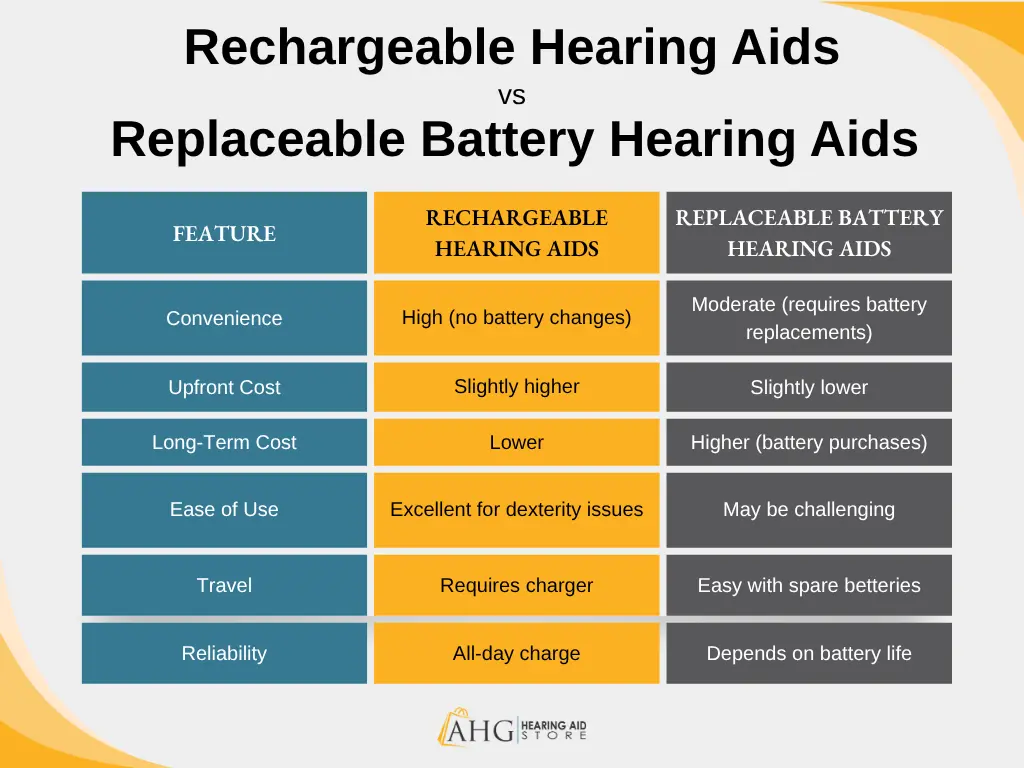
Rechargeable Hearing Aids vs. Replaceable Batteries: Key Differences
Who Should Choose Rechargeable Hearing Aids?
Rechargeable hearing aids are a great option if you:
- Want convenience and simplicity
- Have arthritis or difficulty handling small objects
- Prefer an eco-friendly hearing aid solution
- Use Bluetooth streaming or advanced features regularly
- Have a consistent daily routine that allows for overnight charging
Who Should Choose Replaceable Battery Hearing Aids?
Hearing aids with disposable batteries may be better if you:
- Travel frequently or spend time away from power sources
- Want the ability to quickly swap batteries anytime
- Prefer not to rely on charging
- Are looking for a lower upfront investment
Why Your Hearing Aid Choice Matters More Than You Think
While battery type is important, it’s just one piece of the puzzle. The best hearing aids for YOU depend on your:
- Level and type of hearing loss
- Daily environment (quiet vs. noisy settings)
- Lifestyle and activity level
- Comfort with technology
- Budget
That’s why choosing hearing aids isn’t a one-size-fits-all decision.
Related article: 6 Steps to Getting the Best Hearing Aids
Work with an Audiologist to Find the Right Hearing Aids for YOU
The best way to choose between rechargeable hearing aids and replaceable battery models is to work with a qualified audiologist.
Related article: Should You Go to an Audiologist for Hearing Aids?
At Advanced Hearing Group, our experienced audiologists in Mesa and Scottsdale, AZ will:
- Perform a comprehensive hearing evaluation
- Recommend hearing aids tailored to your specific needs
- Help you compare rechargeable and battery-powered options
- Ensure proper hearing aid fitting and programming
- Provide ongoing support, adjustments, and hearing aid maintenance
With professional guidance, you can feel confident that you’re investing in hearing aids that truly fit your lifestyle—not just what seems convenient at first glance.
Rechargeable Hearing Aids vs. Replaceable Batteries: What’s the Best Choice for YOU?
Both rechargeable hearing aids and traditional battery-powered models offer excellent performance. But ultimately, the right choice depends on how you live your life.
If you value convenience and ease of use, rechargeable hearing aids may be the perfect fit. If flexibility and backup power are more important, replaceable batteries might be the better option.
Either way, working with the experts at Advanced Hearing Group ensures you get the right solution for your hearing, your routine, and your budget. Simply contact us today to schedule an appointment and get on the road to hearing better!