Arizona summers are no joke. Between triple-digit temperatures, dry desert air, and active outdoor lifestyles, Valley residents face unique challenges when it comes to hearing aid care. Whether you’re hiking through the McDowell Sonoran Preserve, walking the trails at Red Mountain Park, golfing, biking, or simply spending more time outdoors, sweat and moisture can quickly become a serious problem for your hearing devices.
Many people don’t realize how common hearing aid issues related to moisture buildup become during the Arizona summer months. Even though Arizona is known for its dry climate, perspiration, humidity trapped around the ears, and sudden monsoon moisture can all contribute to hearing aid malfunctions.
Understanding how heat and moisture affect hearing aids — and learning how to protect them — can help you avoid expensive repairs and keep your devices performing their best all summer long.

Why Summer Is Tough on Hearing Aids, Especially in Arizona
Hearing aids are sophisticated electronic devices packed with delicate microphones, receivers, and circuitry. While modern devices are more durable than ever, they are still vulnerable to moisture exposure.
During the summer in Mesa and Scottsdale, AZ, excessive perspiration can seep into hearing aids during activities such as:
- Hiking
- Outdoor workouts
- Golfing
- Yard work
- Pickleball and tennis
- Walking or jogging
- Poolside gatherings
- Festivals and outdoor events
Even routine daily activities can cause sweat buildup around hearing aids when temperatures regularly climb above 100 degrees.
For active Arizona residents, this combination of heat and moisture can lead to several common hearing aid problems.
Common Signs of Moisture Damage in Hearing Aids
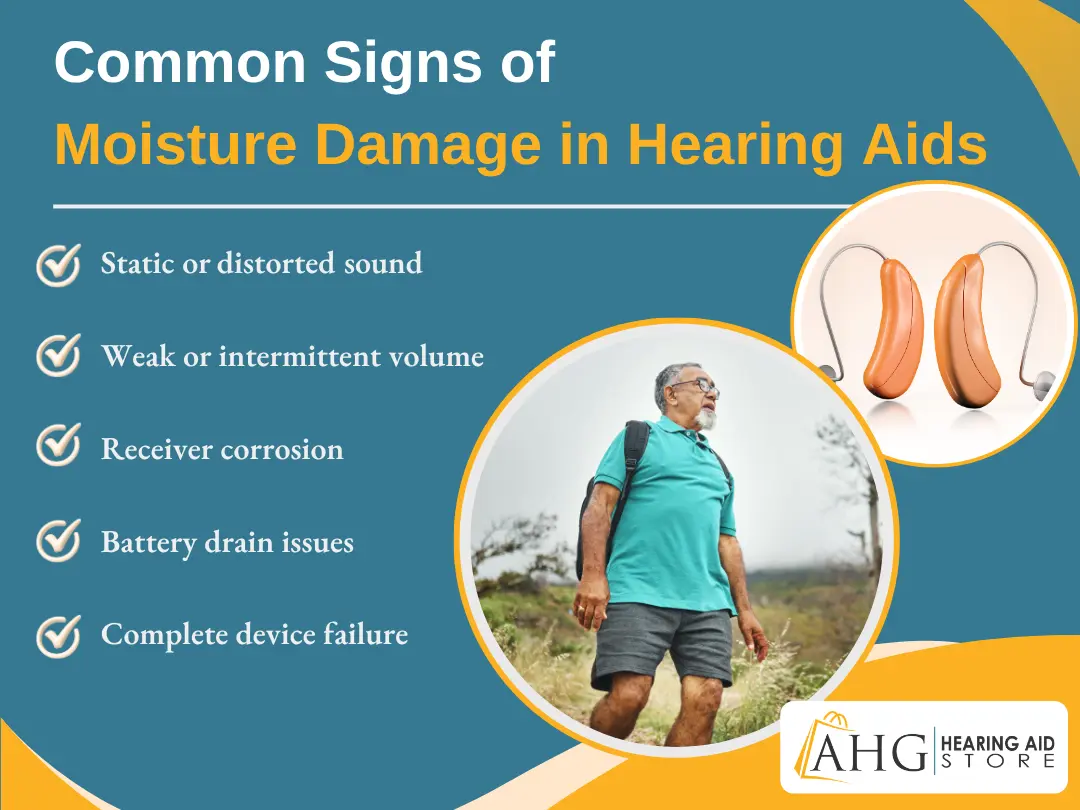
Moisture exposure doesn’t always cause immediate device failure. Often, the damage builds gradually over time. Some warning signs include:
1. Static or Distorted Sound
One of the earliest symptoms of moisture damage in hearing aids is static or crackling audio. Sweat can interfere with microphone performance and internal connections, causing distorted sound quality.
2. Weak or Intermittent Volume
If your hearing aids seem quieter than normal or cut in and out unexpectedly, trapped moisture may be affecting the receiver or amplifier.
3. Receiver Corrosion
Receivers are especially vulnerable to sweat exposure. Over time, moisture can corrode internal components and reduce device performance.
4. Battery Drain Issues
Moisture inside battery compartments can shorten battery life or cause rechargeable hearing aids to malfunction.
5. Complete Device Failure
In severe cases, moisture damage can permanently affect internal circuitry, requiring professional hearing aid repair at our Mesa or Scottsdale audiology clinics.
Why Arizona’s Active Lifestyle Increases Risk of Hearing Aid Damage from Moisture
People living in the Valley often stay active year-round despite the heat. Early morning hikes through the McDowell Sonoran Preserve or evening walks at Red Mountain Park are popular ways to exercise while enjoying Arizona’s beautiful scenery.
However, hearing aid wearers participating in outdoor activities are naturally exposed to more perspiration and environmental debris. Sunscreen, dust, and sweat can accumulate around hearing devices, increasing the risk of moisture-related issues.
This is why summer hearing aid care is especially important for Arizona residents.
6 Tips to Protect Hearing Aids from Moisture Damage
Fortunately, there are several effective ways to protect your devices during the hottest months of the year.
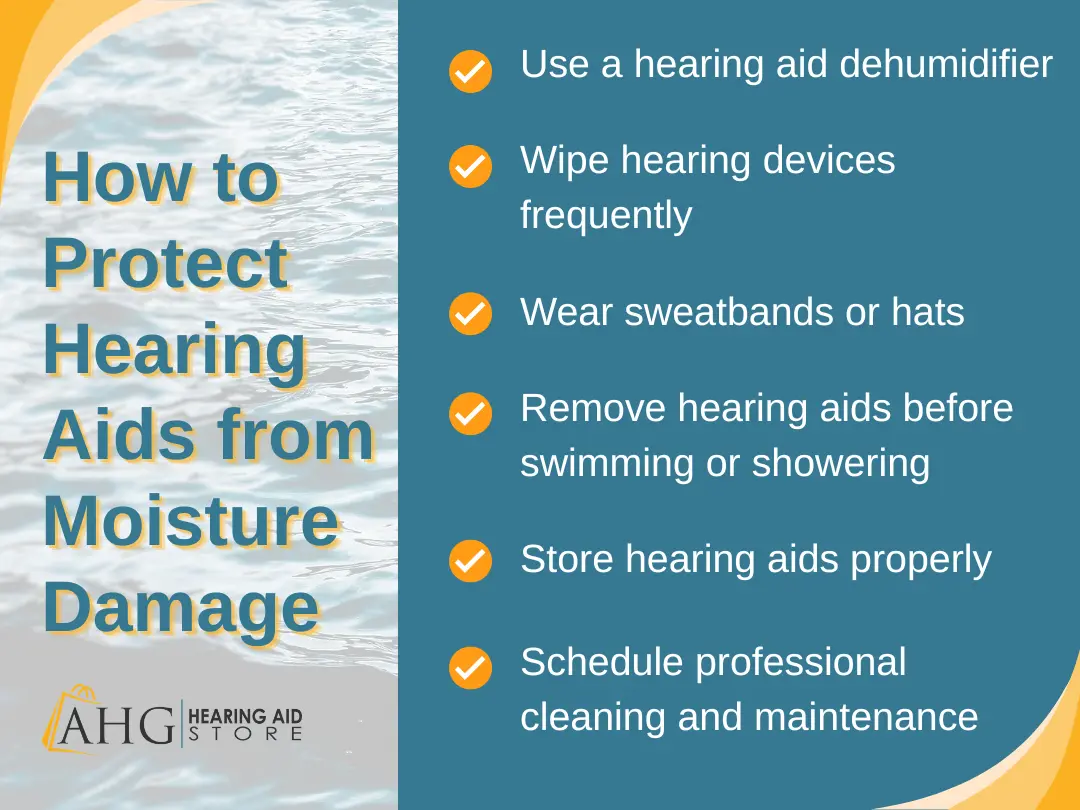
1. Use a Hearing Aid Dehumidifier
A hearing aid dehumidifier or drying kit is one of the best investments you can make. These systems help remove trapped moisture overnight and can extend the life of your devices.
Daily drying is especially beneficial during Arizona summers when perspiration levels increase.
2. Wipe Hearing Devices Frequently
Use a soft, dry cloth to gently wipe away sweat and moisture throughout the day. Pay special attention after outdoor activities or exercise.
Avoid using tissues or paper towels that may leave debris behind.
3. Wear Sweatbands or Hats
For highly active individuals, sweatbands, moisture-wicking headwear, or hats can help reduce perspiration around the ears.
4. Remove Hearing Aids Before Swimming or Showering
Even water-resistant hearing aids should never be submerged in water. Always remove devices before swimming, showering, or using a sauna.
5. Store Hearing Aids Properly
Never leave hearing aids in a hot vehicle or direct sunlight. Excessive heat can damage batteries and sensitive electronics.
Instead, store them in a cool, dry location when not in use.
6. Schedule Professional Hearing Aid Cleaning and Maintenance
Routine professional cleanings are one of the most important parts of hearing aid maintenance that hearing aid wearers should prioritize before summer reaches peak temperatures.
Professional maintenance helps remove hidden moisture, wax buildup, and debris that can contribute to device problems later.
The Importance of Preventive Hearing Aid Maintenance
Many hearing aid repairs caused by moisture exposure are preventable with routine care.
Visiting our experienced Mesa and Scottsdale audiologists for seasonal hearing aid maintenance can help identify early warning signs before small issues turn into major repairs.
Professional services may include:
- Deep-cleaning hearing aids
- Moisture evacuation treatments
- Receiver and microphone inspections
- Battery compartment cleaning
- Performance testing
- Firmware updates
- Replacement of worn components
Preventive maintenance not only helps improve sound quality but may also extend the lifespan of your hearing aids.
Don’t Wait Until Your Hearing Aids Stop Working: Protect Them from Moisture Damage Today!
Arizona’s summer heat can be brutal on hearing devices, especially for active individuals who spend time outdoors. Protecting your hearing aids from sweat and moisture now can help you avoid frustrating breakdowns and costly repairs later.
If you’ve noticed static, weak sound, intermittent performance, or other signs of moisture damage in your hearing aids, now is the perfect time to schedule an appointment at our Mesa or Scottsdale audiology clinics. We can help you keep your devices functioning properly all season long so you can continue enjoying everything Arizona has to offer!