 Profound hearing loss is a life-changing condition that affects a person’s ability to hear even the loudest sounds. For individuals facing this level of hearing impairment, the right hearing support isn’t just helpful — it’s essential for safety, communication, relationships, and overall quality of life.
Here, we’ll break down:
- What profound hearing loss actually is
- Common causes for this type of hearing impairment
- Typical treatments
- Why people with profound loss need different hearing aid technology
- The importance of working with an audiologist, especially compared to over-the-counter devices or non-clinical hearing aid specialists
What Is Profound Hearing Loss?
Profound hearing loss is the most severe category of hearing impairment. It means very little, if any, sound is audible, and even loud speech and environmental noises are typically inaudible without powerful amplification or other assistive technology.
Audiologists measure the degree of hearing loss in decibels Hearing Level (dB HL):
- Normal: –10 to 15 (can hear most sounds)
- Slight: 16 to 25
- Mild: 26 to 40 (misses some soft sounds)
- Moderate: 41 to 55 (difficulty with speech unless loud)
- Moderately severe: 56 to 70
- Severe: 71 to 90 (needs powerful hearing aids)
- Profound: 91+ (hardly hears any sounds)
Source: American Speech-Language Hearing Association
With profound hearing loss, everyday speech, even at close distances, is often inaudible or unintelligible without highly specialized intervention.
Common Causes of Profound Hearing Loss
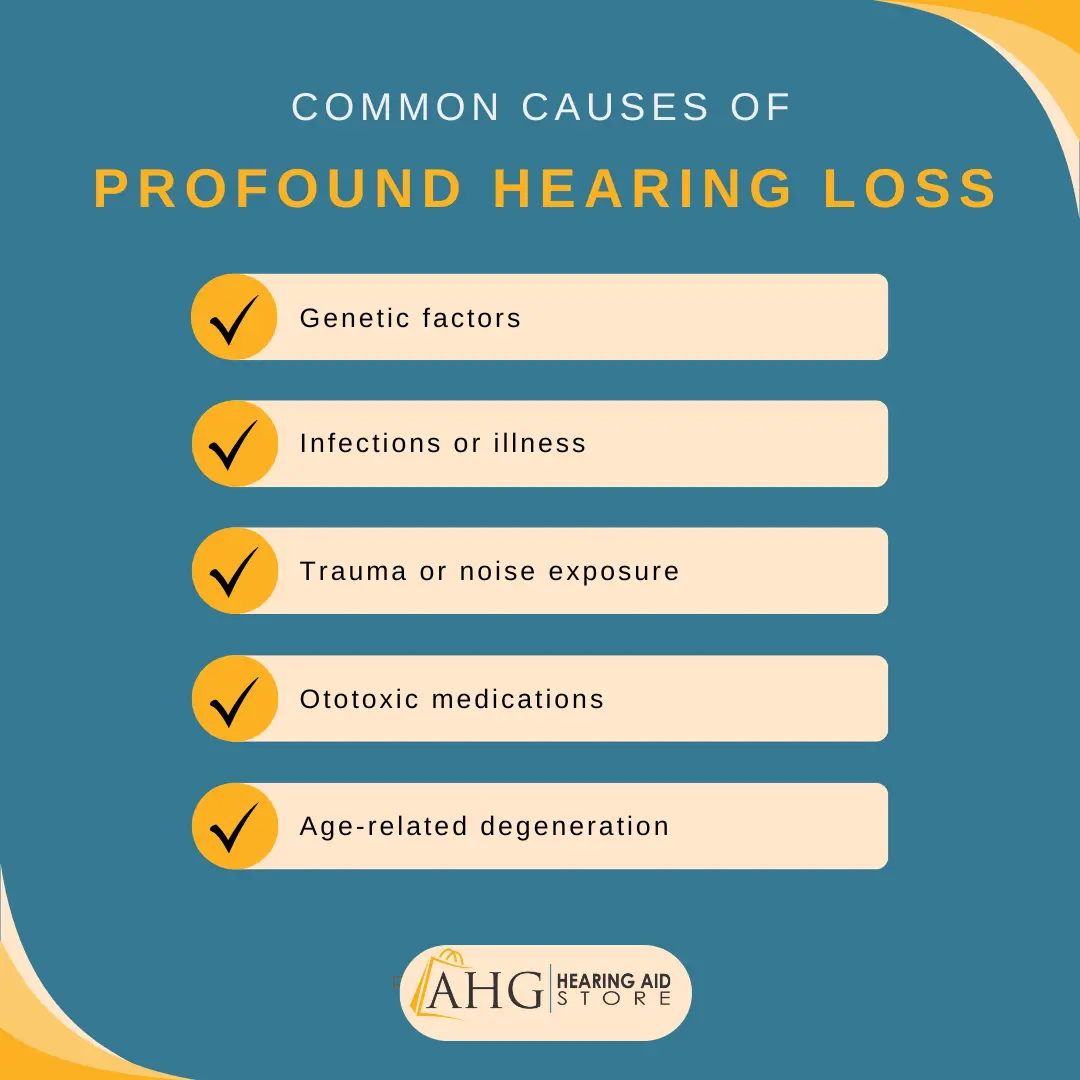
Profound hearing loss doesn’t happen overnight for most people. It can result from many factors, including:
Genetic Factors
- Congenital conditions can cause profound loss at birth
- Hereditary conditions may worsen over time
Infections or Illness
- Severe or untreated ear infections
- Meningitis or viral illnesses
- Autoimmune inner ear disease
Trauma or Noise Exposure
- Blast injuries
- Severe head trauma
- Long-term exposure to very loud sounds
Ototoxic Medications
Certain medications can damage the inner ear structures and lead to permanent hearing loss.
Age-Related Degeneration
Although age-related hearing loss usually starts as mild to moderate, it can progress to more severe forms over time.
How Profound Hearing Loss Is Treated
There is no medication or surgery that restores hearing in most cases of profound sensorineural hearing loss, but there are effective treatment and amplification options:
Hearing Aids Designed for Severe Loss
High-power hearing aids can amplify sounds more than conventional devices and deliver the volume needed for a person with profound loss.
Cochlear Implants

In many cases of profound hearing loss, cochlear implants — surgically implanted devices that bypass damaged inner ear structures — offer better speech understanding than even the most powerful hearing aids.
Related article: Hearing Aids vs. Cochlear Implants: Understanding the Best Treatment for Your Hearing Loss
Assistive Listening Devices (ALDs)
FM systems, captioned phones, alerting devices, and other technologies can supplement hearing instruments.
Rehabilitation & Auditory Training
Therapies and counseling help maximize communication success, especially in challenging listening environments.
Why People with Profound Hearing Loss Need Different Hearing Aids
Hearing aids for mild to moderate hearing loss differ dramatically in power, design, and processing from those needed for profound loss.
Higher Output and Custom Amplification
- Increased gain and output: To make speech audible
- More robust receivers: To handle louder sound without distortion
- Advanced processing: To focus on speech and reduce feedback
Devices marketed as “one-size-fits-all” (especially over-the-counter hearing aids) typically don’t provide enough amplification or the precise tuning needed for profound loss.
Custom Fitting Matters
People with profound loss often benefit from custom earmolds and advanced directional microphones that work in difficult listening situations like restaurants or meetings.
Audiologist vs. OTC Hearing Aids or Hearing Aid Specialists
Why Seeing an Audiologist for Hearing Loss Treatment Is Critical
An audiologist is a doctor of audiology with extensive training in hearing and balance disorders. They play a key role in the diagnosis and rehabilitation of hearing loss, including:
Comprehensive Assessment
- Full diagnostic hearing evaluation
- Speech understanding testing
- Tympanometry and reflex testing when needed
Individualized Treatment Planning
An audiologist determines not just if you need amplification but also what type, power level, and technology features will give you the best communication outcomes.

Hearing Aid Fitting and Adjustment
Fitting a hearing aid for profound loss isn’t plug-and-play. It requires:
- Real-ear measurement verification
- Adjustment based on speech perception
- Follow-up and counseling
Medical Insight
Audiologists can identify red flags that warrant a referral to another healthcare professional, including infections, sudden hearing losses, or other health issues.
Related article: Should You Go to an Audiologist for Hearing Aids?
Understanding the Limitations of Over-the-Counter (OTC) Hearing Aids
Over-the-counter hearing aids are designed for self-identification of mild to moderate hearing loss by consumers. They are not appropriate for:
- Profound hearing loss
- Complex listening environments
- Patients who need medical evaluation, auditory rehabilitation, or precise tuning
Because they lack professional fitting and verification, OTC devices can lead to poor outcomes, frustration, and wasted money.
Related article: OTC vs. Prescription Hearing Aids: A Complete Buyer’s Guide
Partner With an Audiologist at Advanced Hearing Group
When it comes to profound hearing loss, expert care matters. At Advanced Hearing Group, our audiologists specialize in:
- In-depth diagnostic testing
- Personalized hearing solutions
- State-of-the-art hearing aid technology
- Ongoing support and rehabilitation
We help patients of all ages unlock better hearing, communication confidence, and quality of life far beyond what over-the-counter hearing devices can provide.
If you have profound hearing loss, it is a serious condition requiring powerful technology, professional expertise, and personalized care. While over-the-counter devices may help with mild hearing loss, they fall short for people with profound hearing impairment.
When you or a loved one experiences significant hearing challenges, work with an audiologist — the true hearing health professionals — for evaluation, treatment planning, and ongoing support.
Better hearing begins with expert care, and our audiologists are here to help. Simply schedule an appointment at our Mesa or Scottsdale locations today and start your journey toward better hearing.